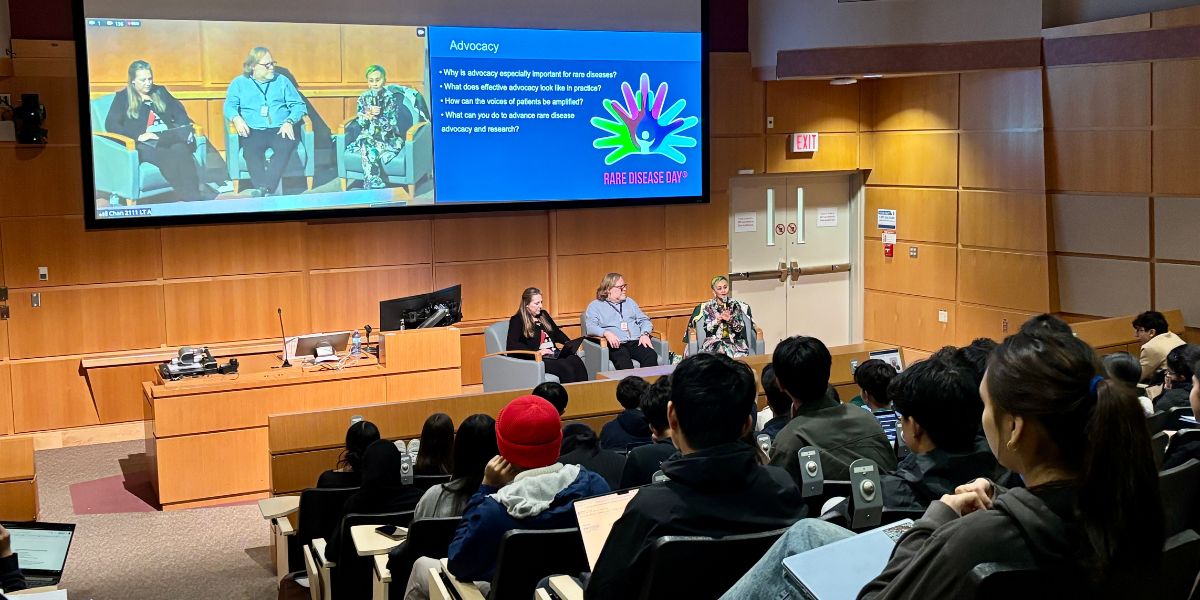
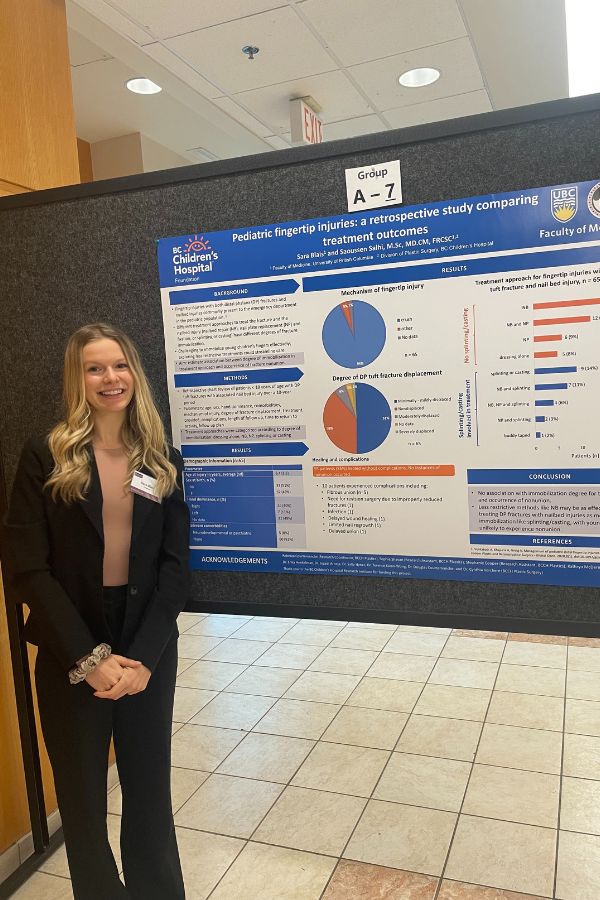
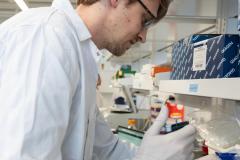
High school students attending the latest Vancouver edition of Mini Med School had the opportunity to participate in 30-minute information sessions with mentors such as Kate Kim and Sara Blais, currently in their third year of medical school at the University of British Columbia (UBC). Mini Med School is a health science outreach program hosted by BC Children’s Hospital Research Institute (BCCHR). Created in 2003, this popular program was designed for high school students to explore the world of health sciences, learn about career opportunities in the field, and connect with leading researchers and health experts.
Mini Med School is designed for high school students to explore the world of health sciences, learn about career opportunities in the field, and connect with leading researchers and health experts.
Thanks to the new component, high school students can enjoy the benefits of building connections with medical students early on, such as learning from them what medical school is really like, receiving encouragement and tips on how to prepare for university, and getting answers to questions they might hesitate to ask senior physicians and researchers. Held both in person and remotely, the info sessions also allow students to be mentored in an informal setting.
Sara and Kate, two of the mentors this year, attended Mini Med School when they were in high school. Sara also participated in the Summer Student Research Program, a collaboration between UBC, BC Children’s Hospital (BCCH), and BC Women’s Hospital + Health Centre. They decided to return as mentors for Mini Med School to help inspire the newest generation. We sat down with Sara and Kate to hear about their journey from high school to medical school to mentorship, and why students should check out the Mini Med program.
Sara also participated in the Summer Student Research Program and hopes to integrate research into her career to meaningfully improve patient care.
How has Mini Med School contributed to your journey?
Kate Kim: Hearing from physicians and researchers about their first-hand experiences was an unforgettable experience. I still have the notes from the year I attended the program. I remember a lecture about plastic surgery where they talked about reconstructing ears from different materials and body parts to care for children born without them. It was one of the most wondrous things I’ve ever learned! I didn’t have any doctors in my circles, so the program gave me clarity about how exciting medicine can be, and it made sense to give back. Mentors like me coming back to support can have an impact, and it’s incredible to connect with the new generation.
Sara Blais: Attending Mini Med School was one of my earliest exposures to the field of medicine as a high schooler and what got me thinking it could, in fact, be a career for me. As I didn't come from a family of physicians, having the chance to connect with people in the field so early was extremely valuable and made the idea of a career in medicine feel real and attainable. I'm grateful for that experience, which is why returning as a mentor felt so natural and an important way to give back to this community. Several students asked about activities I was involved with prior to med school. I shared my own path with them but also emphasized that there are many paths to med school, with no single right way to get there. Following our individual passions is one of them and just as important as any specific activity.
How did you decide to pursue a medical career?
KK: I majored in computational neuroscience and worked a year in bioinformatics. During that time, I realized I’d enjoy the human interaction that comes with clinical work more than just staying in the computer science realm. For anyone thinking we need to set our minds on a career path in high school or even the first few years of undergrad, it hasn’t been true for me.
SB: I’ve always been drawn to understanding how people function from a physiological and psychological perspective. That interest grew as I got involved in a peer support club in school and I was trained to respond to people in emotional distress. In my undergrad, I studied biology and psychology, so I explored both passions in one degree. Outside the classroom, I helped lead a club focused on eradicating stigma related to mental illness and joined the University of Victoria’s Risky Behaviour Lab, where I saw how applying evidence-based care can help improve health outcomes in young people. Those experiences, among others, showed me that medicine felt like the natural way to bring together my passion for science and physiology with my desire to help people.
The human interaction that comes with clinical work is one of the aspects that drove Kate to medicine.
Why should high school students attend Mini Med School?
KK: The early exposure to health sciences is key. As someone who was going back and forth between multiple fields, participating in Mini Med School helped me explore if medicine could be the right path for me. With this new mentorship component, participants can gain knowledge from those currently in med school. One example is, I found out, in my fourth year, that everyone had written their Medical College Admission Test® (MCAT®) after the second year of undergrad. I didn’t know that was possible. [MCAT assesses the knowledge of natural and social sciences concepts as well as critical thinking and scientific problem-solving skills required to begin the study of medicine]. By connecting with medical students, Mini Med participants can better understand what the process is like.
SB: Mini Med School is a great opportunity for students to talk to experts about their motivations, learn what different medical careers can look like, and see that it’s something achievable. Then, they can assess whether it’s worth exploring. It’s important for women in Science, Technology, Engineering, and Mathematics (STEM) fields to attend programs like Mini Med School because it's a meaningful space for representation. For young women interested in STEM, hearing from women in medicine and seeing them thrive can be especially valuable.
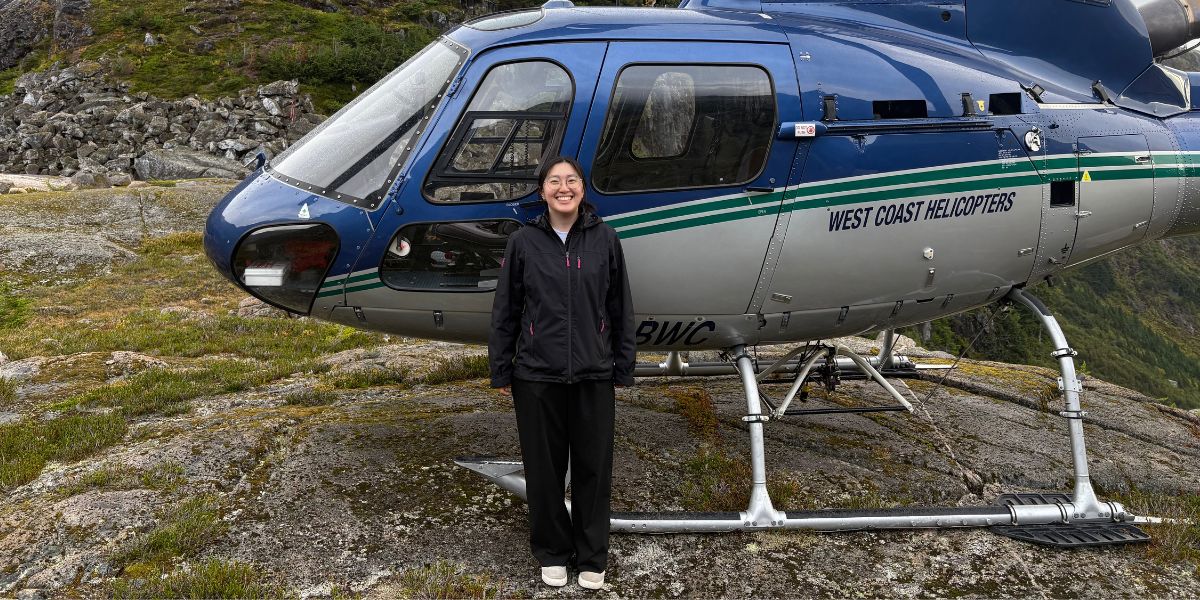
For Kate, her best experience so far has been internal medicine; she recently trained in rural family medicine in an isolated area of Vancouver Island.
Do you have any goals set for your medical career?
KK: My best experience has been internal medicine where I got to work with sick patients, as part of a team with other medical students, residents, and attendings. That feeling hasn’t been matched so far with any other field. I’ve been involved in research as well, so I’m trying to figure out if it’s something I want to incorporate into my future.
SB: Working with patients will always be important in my future career. I've enjoyed the research I’ve been involved in with the Pediatric Plastic Surgery Department at BCCH and I hope to integrate research into my career in a way that meaningfully improves patient care. I’m interested in many areas, including anxiety disorders, obsessive-compulsive disorder, body-focused repetitive behaviour disorders, and somatization, which is more common than people realize. Adverse childhood events can negatively impact future outcomes, so intervening early is incredibly important. Because of all of this, I’ve been thinking about psychiatry as a specialty, though there are still many specialties for me to explore. Physicians working with children can have a unique opportunity to make a lasting and tangible impact on their future lives, and that’s something that motivates me.
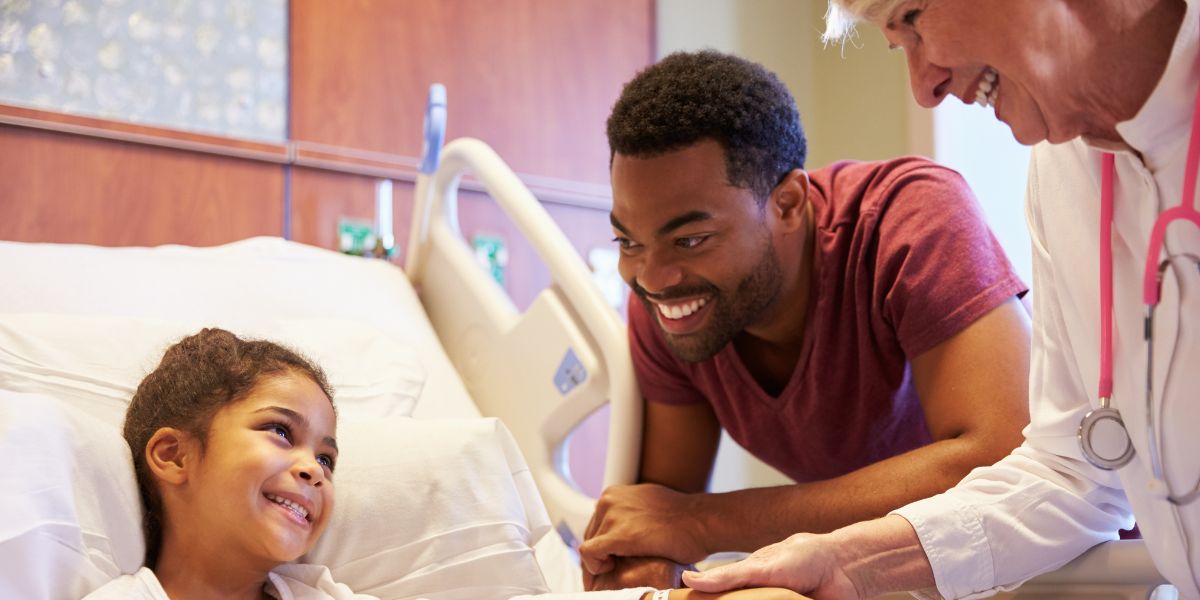
The unique opportunity that pediatricians have to make a lasting and tangible impact on a child's future life is a key motivator to Sara.
What would you like to see in the future?
KK: I learned an incredible amount in rural family medicine, working in a small town in the north tip of Vancouver Island. It’s pretty isolated, so I saw inequities in access compared to the Lower Mainland. I have a lot of hope with new medical schools opening up, innovation, and investments. I aim to continue to be a compassionate medical student and future physician who listens and works with patients to figure out the best way to support them.
SB: I’d love to help transform how society approaches mental health, moving from a crisis response to prevention, awareness, and understanding. I'll continue to advocate for accessible psychiatric care as well as systems that connect mental wellness with broader health and social supports that extend beyond the hospital or appointments with clinicians. It’s key to recognize the whole person, not just the body or the mind as separate entities.
Share this story
Get Involved
We need you today for a better tomorrow. Our kids are counting on it.
For International Childhood Cancer Day we spoke with Dr. Sarah Alexander, a new BCCHR investigator and pediatric oncologist at BC Children’s Hospital who specializes in some of the most common childhood cancers, including non-Hodgkin lymphoma and acute lymphoblastic leukemia (ALL).
BCCHR researchers are working with Chinese Canadian communities to co-design culturally meaningful, engaging, and effective mental health resources for parents to support children under the age of 12.
The DECRYPT-BABYBRAIN clinical trial brings together leading paediatric centres coast-to-coast to pioneer a radiation-free approach to treat rare and aggressive brain cancers in babies. Dr. Sylvia Cheng is the lead for BC Children's Hospital.
Dr. Matthew Wiens and colleagues at the Institute for Global Health are the first Canadian Team to lead a Horizon Europe Pillar 2 project that aims to reduce childhood deaths from severe infection (sepsis) after hospital discharge.
BCCHR and UBC researchers discover how to grow specialized immune cells for more accessible off-the-shelf cell therapies to treat cancer, autoimmune disorders and more.
We believe there’s nothing we can’t do with your support. It can take years to turn scientific breakthrough into new interventions and treatments. Funding helps speed the pace of change. When given the resources, we can bring transformative therapies – and hope – out of the laboratory and into the clinic to save and improve children’s lives.