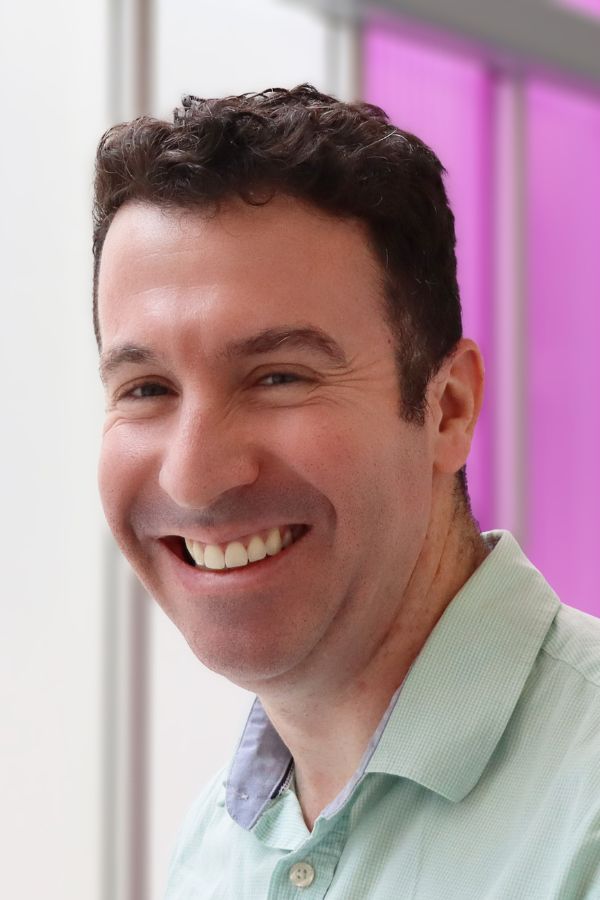
Born and raised in Johannesburg, Dr. Alastair McAlpine, a researcher with the Vaccine Evaluation Center (VEC) at BC Children’s Hospital Research Institute (BCCHR), is passionate about pediatric palliative care and infectious diseases. He received his medical training in South Africa, but limited vacancies to pursue a specialization in his desired field brought him to Vancouver. After meeting a Canadian physician who was in South Africa for an elective program, Dr. McAlpine decided to follow the suggestion to apply for a fellowship in pediatric infectious diseases at BC Children's Hospital where he joined in 2018.
Dr. McAlpine, who is a clinical assistant professor in the Department of Pediatrics at the University of British Columbia, is also a book author. His memoir, Prescription: Ice cream — A doctor's journey to discover what matters, was published in 2023 and is divided into three sections: his internship in community services at one of the busiest hospitals in the world; his challenges with mental health and alcoholism; and his passion for pediatric palliative care and a related social media thread that garnered more than 20 million views.
We met with Dr. McAlpine to learn more about his medical journey, research, and commitment to counter misinformation.
What made you interested in the role of social media in science communication?
When Twitter (now X) came out, I was struck by the powerful ability of a tweet to go viral and the lack of significant moderation. I could see the potential for misinformation to be amplified out of proportion bypassing any kind of quality control. I tried to start conversations about it with colleagues, but everyone just seemed to pay attention to medical journals. When I realized that a landmark study in a top journal was seen by only a couple thousand people and tweets were seen by millions, I thought, “this is a game and we’re losing it.” Now, we know how dangerous social media algorithms are to amplify misinformation, but many in the medical field still don't want to get involved. Misinformation has gone supersonic, and I don't know if we'll ever be able to catch up.

How does vaccine misinformation impact patients, and how can they make decisions that are safe?
Canada and the United Kingdom have lost their measles elimination status. The United States has gone from essentially zero cases 20 years ago to an imminent loss of its measles elimination status, and has also seen the return of whooping cough. It's no coincidence that the rise of misinformation on social media has corresponded with a decline in vaccine confidence amongst the general public. Fewer people are completely confident and more people are in the total rejection phase.
Research shows that the number-one factor driving vaccine confidence is a firm recommendation from a trusted health-care provider. If you find anything online that makes you worried, talk to your family doctor or pediatrician openly. They’re generally the best source to ask questions. If you use social media, follow trusted health-care providers and pro-science voices rather than scary, anonymous accounts. Resist clicking anti-vaccine content because, once you do, the algorithm will feed you more. Break out of that cycle.

You’re involved in a study called Vaccines and Me, focused on children and youth aged 11 to 18. What is the VEC trying to achieve?
Decades ago, it was difficult to find information. Now, there’s information overload, and it’s challenging to find content we trust. We aim to create a high-quality digital hub of information that addresses the fears and anxieties of children and youth. This is an ambitious project that hopefully will make a difference to convince youth that vaccines are beneficial. We’ve done a large systematic review, an extensive survey throughout BC, and interviews to find out what this audience thinks about vaccines, what they’d like to know more about, what they’re worried about, and where they get their information from. We’re now analyzing the data, which will inform the direction of the hub. The content will be vetted by us to ensure accuracy and reliability, but it will be created by youth and for youth using language and media relatable to them so they feel empowered to make the best decisions about vaccination. We're hoping to use their desire to know more and their intrinsic sense of altruism to connect in a way that is comfortable to them. The launch is planned for this summer.
How has your medical training prepared you for the work you do now?
I did my pediatric residency at the Red Cross Hospital, in Cape Town, which was the only African hospital dedicated to children back then. Prior to that, I had done my internship and community service at the Chris Hani Baragwanath Hospital, the only in Soweto during my training. Soweto is a township of Johannesburg established during the apartheid to house non-whites, as they had to work on the nearby mines but couldn’t live in the designated whites-only spaces. Soweto was growing rapidly, and Baragwanath had more than 3,000 beds. On busy nights, we admitted five times more children than we do here at BC Children’s. When we’re seeing too many patients at the same time, we know we may not be able to provide them with all the care they need. Baragwanath was notorious for an exceedingly high-pressure environment and particularly overwhelming for interns, but it made me quite resourceful.
What inspired you to talk openly in the book about your internship and mental health challenges?
I was fortunate to work with Paedspal, an amazing group in Cape Town that provides palliative care to critically ill children. I was amazed by how brave those kids were in the face of adversities. There was a little girl who was quite sick and we all knew we were losing her. I was devastated and could barely keep it together, but she seemed so upbeat. She told me she knew she’d see her family and dog again and wasn't worried about what she called a temporary problem. That was profound, so I started asking kids in palliative care what made them happy. None of them cared about money or social media. What they valued was intentional time with loved ones, like reading stories together, going to the beach, and eating ice cream. Adults forget what matters in life when the mortgage is due, the traffic is bad, and we're stressed out.
Intentional time with loved ones is what life is all about. Kids certainly know it.
I posted a Twitter thread with some of the kids’ answers to my question and it went viral, so a publisher contacted me. While writing the book, I reflected upon my own life and realized we forget that doctors and health-care professionals are not machines; we're humans doing a stressful job. That’s why I felt strongly that I needed to talk about how, in medical school, I found myself addicted to alcohol, the toll it took on me, and how I found the strength to overcome it. Addiction is a mental health issue, and we’re not defined by them. While I wasn’t responsible for being sick, I did take responsibility for my recovery. I hoped that someone would read the book, and either seek help or feel inspired to have open conversations about mental health.
Despite the challenges, I enjoy my work every single day. Medicine and research are incredibly rewarding. Caring for sick children is a great way to spend my life.
Resources about misinformation:
FactCheck.org
Full Fact — Health
Government of Canada: Online disinformation
Media Smarts — Canada's Centre for Digital Media Literacy
ScienceUpFirst
Snopes — Fact checking


